
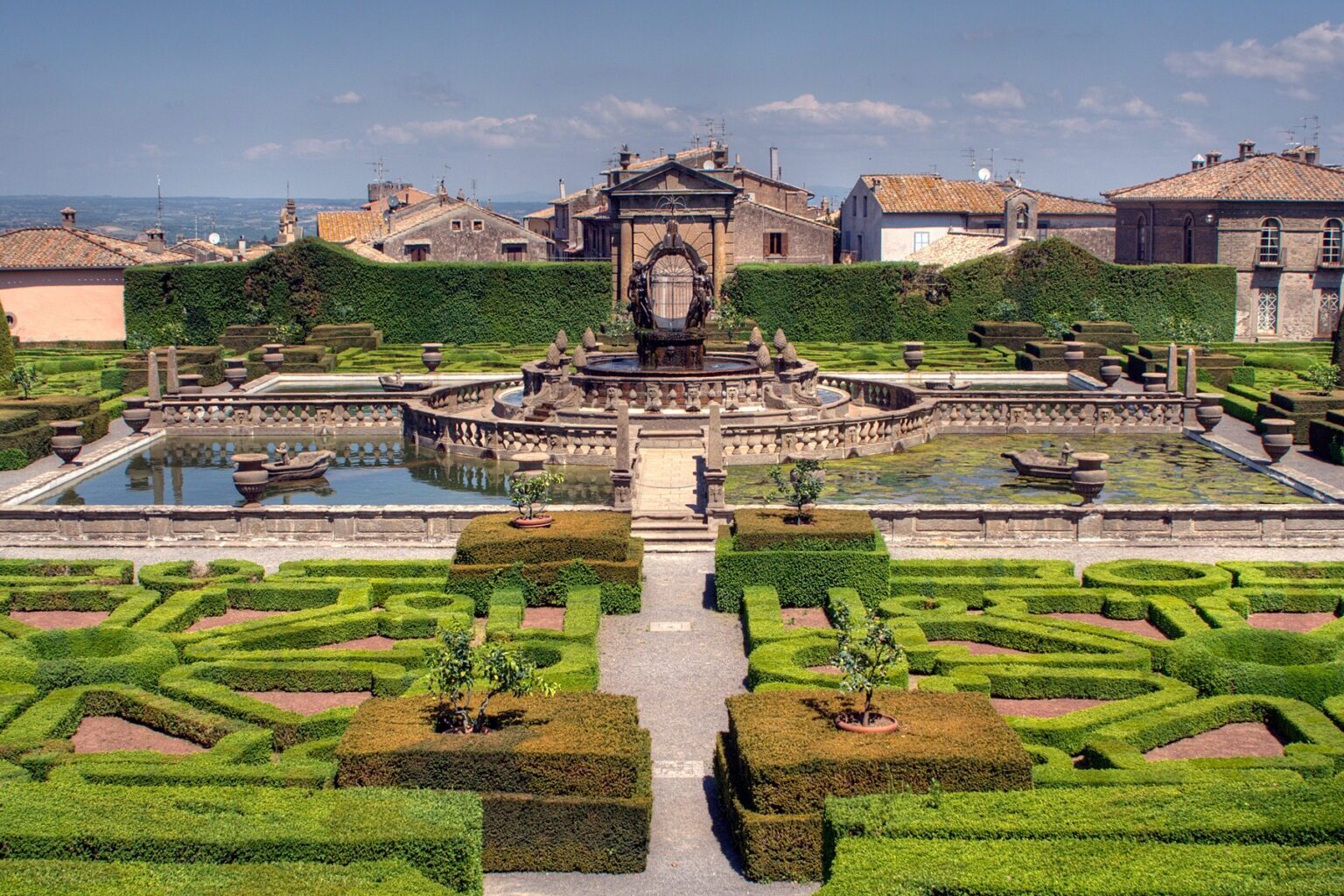
Itinerary along the enchanting Amalfi Coast

[vc_separator type=”normal” up_style=”px” down_style=”px”]


Costiera Amalfitana, Ville Vesuviane e Cilento

Tra Giardini e Archeologia

Between archaeological sites and breathtaking landscapes we will discover the charm of the Amalfi Coast: southern Italy where joy of life and a smile are the added value of the trip, together with exceptional food and wine

 A suggello, ville e giardini che raccontano la storia d’Italia

[vc_empty_space image_repeat=”no-repeat”][vc_empty_space image_repeat=”no-repeat”]
[vc_accordion active_tab=”false” collapsible=”yes” style=”accordion” hide_icon=”no” title_icon_alignment=”icon_left”][vc_accordion_tab title=”DAY 1″]

Departure by Frecciarossa train from Milan or Rome and arrival at Napoli Centrale.

Meeting with the coach and guide Dr Paola Valitutti, archaeologist and expert on the Campania region.

The day will be dedicated to visiting two of the most representative villas Vesuviane.

Transfer to Torre del Greco for a visit to Villa Prota, exceptionally welcomed by the owner, Donna Selvaggia Sanseverino.

King Charles of Bourbon, enchanted by the beauty of the Vesuvian landscape, lush vegetation, the view over the gulf and the mild climate, decided in 1738 to move with his wife Maria Amalia of Saxony to Portici, where he had a royal palace built. The location was also strategic for following the excavations at Herculaneum. The most important Neapolitan noble families followed the King, building splendid villas or adapting existing buildings so they could host the King regularly, especially in summer. Thus the marvellous Vesuvian Villas were born along a road called the Golden Mile for its historic and landscape wealth. In 1748 architect Sanfelice, with an almost magical touch, transformed an ancient 16th-century cellar surrounded by a vast vineyard into the graceful, luxurious Villa Protala whose facade is considered a true theatrical set. Its wings reaching skyward give the impression it is ready to take flight. A national monument, it stands on the Golden Mile, on the slopes of Vesuvius, on the Gulf of Naples, facing Capri and Sorrento, and has remained in the same family’s ownership, preserved intact over the centuries.

Second breakfast included at the Residence.

Next, visit to Villa Campolieto, a Vesuvian villa along the Golden Mile in the municipality of Ercolano.

The villa stands in a panoramic position on the seaward side of the former royal road to Calabria, on the stretch later known as the Golden Mile for its Bourbon-era noble residences.

The villa was built from 1755 by Lucio di Sangro, Duke of Casacalenda, who commissioned the design and construction from Mario Gioffredo; a few years later, following disputes between the architect and the Dukes of Casacalenda, they revoked his commission although work was well advanced. Michelangelo Giustiniani was first called to replace him, but the work was then entrusted to Luigi Vanvitelli, who directed it from 1763 to 1773, leaving his mark with a few substantial changes to the original design; after his death his son Carlo took over and completed it in 1775.ani, ma poi l’opera fu affidata a Luigi Vanvitelli che diresse i lavori dal 1763 al 1773, dando così la propria impronta con l’esecuzione di poche ma sostanziali modifiche al progetto originario; dopo la sua morte, gli subentrò il figlio Carlo, che la portò a compimento nel1775.

At the end, departure for Vietri sul Mare and check-in at Lloyd’s Baia Hotel ****.

Dinner and overnight at the hotel.

[/vc_accordion_tab][vc_accordion_tab title=”DAY 2″]

Breakfast at the hotel and meeting with Dr Paola Valitutti.

We will dedicate this day to a tour along the beautiful Amalfi Coast.

We travel by coach to Ravello and we will visit Villa Rufolo,
a favourite haunt of musicians, artists and poets, celebrated in Boccaccio’s verses, and whose gardens Richard Wagner saw as the embodiment of his works and imagination. The garden of Villa Rufolo, also known as the Garden of the Soul, spreads over two levels, approached by a tree-lined avenue of 19th-century character. Ancient walls half-hidden by cypresses and limes lead discreetly to the Moorish cloister; after a brief pause, where noble architecture stands bare to view, a small staircase leads to the first level of the garden.
The atmosphere is enveloping, evoking an ancient dimension that recalls the romantic garden and where Boccaccio’s moving verses still resonate. The garden’s history can be divided into three distinct periods: it encompasses centuries of history, magnificent works and legend. The villa’s structure is unique in its architecture and decoration, never failing to surprise and astonish travellers.

Next we visit Villa Cimbrone, which owes its charm, beyond the poignant beauty of the places, to the historic memories of cultural life of which it was a meeting place. A meeting place for the English on the Coast and the famous Bloomsbury circle in London, it hosted sovereigns and leading figures in art, science and politics. Among them Forster, Strachey, Keynes, Moore, Russell, Eliot, Crick, Piaget, Virginia Woolf, D.H. Lawrence, the Dukes of Kent and Churchill. The villa also sheltered Greta Garbo’s famous love affair with Leopold Stokowski.

We then travel by coach to Amalfi to visit the 13th-century cloister and the garden of the historic Hotel Luna Convento.

The hotel is housed in a former monastery: the Moorish cloister now encloses a small, attractive garden adorned with splendid flowers.

Second breakfast at the hotel restaurant.

Passeggiata guidata ad Amalfi.

Next we board a private motor launch per una crociera lungo la bellissima costa fino a Salerno.

Transfer by bus to Vietri.

Dinner at a typical local restaurant.

Overnight at the hotel.

[/vc_accordion_tab][vc_accordion_tab title=”DAY 3″]

Meeting with guide Dr Paola Valitutti and departure by coach for Salerno.

We will visit “Opulent Salernum”, a city of Roman origin with a rich medieval history; Salerno offers routes among churches and palaces, museums and gardens. Notable Lombard medieval heritage, visible in churches and town layout, and famous Norman per gli spregiudicati knights who shaped the city’s history and increased its fortune. Salerno was known throughout the Christian West for its medical school, earning the title “Hippocratica Civitas”. In the heart of Salerno, a stop at the terraced botanical garden, forerunner of modern botanical gardens,  the Garden of Minerva. These places were owned from the 12th century by the Silvatico family, whose member Matteo distinguished himself between the 13th and 14th centuries as a leading physician of the Salerno Medical School. He authored the Opus pandectarum medicinae, with a book on medicinal plants. The existence of a medieval Salerno physic garden has been clearly demonstrated, established in the early 14th century by physician Matteo Silvatico, serving the masters of the Medical School. In this space, now identifiable as the Garden of Minerva, many medicinal plants were cultivated and teaching activities were carried out to show Medical School students the plants with their names and properties (ostensio simplicium).

Next, visit to the virtual museum of the Salerno Medical School. In the virtual museum, themes and protagonists of that glorious chapter of history are brought to life in an engaging yet essential, rigorous narrative  in the years immediately after the year 1000, when Salerno and its Medical School stood at the centre of the West’s scientific renaissance.

Careful research among precious medieval codices in major Italian and European libraries provided the rich iconographic material for the narrative, unfolding in a clear, accessible way through spectacular displays and animated miniatures.

The display uses interactive techniques and stereoscopic reconstructions in the Virtual Theatre and was created with the Mathematics and IT Department of the University of Salerno.

The virtual museum was conceived and curated by Maria Pasca, directed by Maria Rosaria Mari, with scientific advice from Alessandro Di Muro and Luciano Mauro. Dr Luciano Mauro, husband of Dr Paola Valitutti, will guide us through the garden and museum.

Next, transfer to Paestum.

Second breakfast included at Ristorante Domus Clelia overlooking the Valley of the Temples

In the afternoon, visit to the stunning Parco Archeologico di Paestum.

Greek Poseidonia, later under Lucanian rule and then Roman Paestum, encloses an archaeological area considered among the most remarkable in the world.
Its temples are among the best preserved in the classical world.
The surrounding landscape, largely unchanged since rediscovery, helps evoke the splendours of this ancient frontier city.
The walk runs among the sacred areas of the three Greek temples known as the Basilica, Neptune and Ceres, the forum with public buildings, some Greek remains, Roman houses and the amphitheatre (or part of it).

The National Archaeological Museum of Paestum was founded in 1952 within the ancient city. It began as a single hall with external architecture in the Piacentini style, built to the dimensions of the structure reproducing the first treasury of the sanctuary of Hera. This original core was later enlarged and new rooms were added around an inner garden with windows opening outward.  Among the priceless historical and artistic works in the museum are the painted slabs of the so-called Tomb of the Diver, the only surviving Greek painting from Magna Graecia. It is a slab-built tomb closed by a flat cover, with frescoes on the inner walls. On the cover slab a man is painted diving into water: the dive symbolises the passage from life to death.

At the end, return to the hotel in Vietri for dinner.

[/vc_accordion_tab][vc_accordion_tab title=”DAY 4″]

Breakfast at the hotel and departure with luggage for Caserta.

Departure for Caserta.

Meeting at the ticket office of the Royal Palace of Caserta, with Architect Nicola Tartaglione, a landscape architecture specialist.  Architect Tartaglione founded the G.I.A.D.A. association (Gardens and Historic Residences of Harmony), established in 1999 to catalogue and promote the gardens and historic private residences around the Royal Palace of Caserta.

The architect will let us discover the Royal Palace from new and unusual perspectives, opening normally closed areas such as the Court Theatre.

The visit begins with the little-known English Garden, created at the request of Queen Maria Carolina of Austria, wife of King Ferdinand IV. The English Garden was created by Carlo Vanvitelli and the English gardener John Andrew Graefer. Queen Maria Carolina, who invested her personal fortune in it, intended the Caserta garden not only to rival but to outshine Versailles’ Petit Trianon, commissioned by her sister Marie Antoinette, Queen of France.

The Royal Palace of Caserta was commissioned by Charles III of Bourbon, struck by the beauty of the Caserta landscape and wishing to give Naples, capital of his kingdom, a worthy seat of government — a palace able to rival Versailles. It was initially assumed it would be built in Naples, but Charles of Bourbon, aware of the capital’s vulnerability to attack (especially from the sea), chose to build it inland in the Caserta area: a safer location yet not too far from Naples. The sovereign turned to architect Luigi Vanvitelli, asking that the project include not only the palace but the park and the layout of the surrounding urban area, with water supplied by a new aqueduct.ad eventuali attacchi (specie da mare), pensò di costruirla verso l’entroterra, nell’area casertana: a safer location yet not too far from Naples. Il sovrano si rivolse all’architetto Luigi Vanvitelli al quale chiese che il progetto comprendesse, oltre al palazzo, il parco e la sistemazione dell’area urbana circostante, con l’approvvigionamento da un nuovo acquedotto (Acquedotto Carolino) che attraversasse l’annesso complesso di San Leucio. The new palace was to symbolise the Bourbon state, expressing power and grandeur while remaining efficient and rational.

After visiting the Royal Palace we transfer to the private residence of Palazzo Mondo owned by painter Domenico Mondo, for a second breakfast with exceptional catering in the evocative setting of the residence.

Palazzo Mondo is an example of southern Italian aristocratic architecture where stylistic transitions between Baroque and Neoclassical taste can be seen. These stylistic shifts appear on the main facade and in the decorative treatment of balconies and first-floor windows.
The first-floor apartment, partly well preserved, is rich in atmosphere and suggestion.

Inside you can visit the dining room, a “picturesque” sitting room, a study with walls painted with Etruscan-style borders, and a prayer room with a wooden statue of the Pilgrim Madonna.

Remarkable is the corner sitting room in late Baroque style, with terracotta floors with majolica borders and frescoed walls and ceiling. The ceiling painting is a trompe l’oeil in which the quadratura painter illusionistically opens the wall into receding architecture, while the figurative painter Domenico Mondo (Capodrise, 1723 – Naples, 1806), called in those same years to decorate the Royal Palace of Caserta, paints eight female figures symbolising virtues.

A room with Pompeian red walls, now furnished with a four-poster bed, completes the 18th-century apartment.

Enclosed within the palace walls is a small courtyard typical of local houses.

Today, following architect Nicola Tartaglione’s careful, delicate restoration of the whole complex, it is conceived as a “picturesque garden” where the aralia trunks are the highlight: their lush, sinuous growth spreads horizontally seeking sunlight, forming an astonishing web framing the well, the old wood-fired oven or the loggia arches from every viewpoint.

A questo botanical and aesthetic triumph also includes citrus trees, strawberry grapes and medlars, along with flowering cultivated plants including intensely scented white daturas, clematis, jasmine and ecmeea.

After second breakfast, still with Architect Tartaglione, visit to the beautiful Palace of the Duke and Duchess Guevara di Bovino, now better known as Villa Porfidia (after the current owners), brings together several historical layers, best represented by the 18th century.

It was built by the Guevara family, close to the Bourbon Royal House, to stay nearer the Neapolitan court when it moved to the Royal Palace of Caserta, just 4 km away.

Inside, rooms follow one another cui si accede per mezzo di una bella scala decorata da gruppi scultorei classici. Of particular interest are the decoration of some rooms, executed both in fresco and with the papier peint technique (painted paper), covering the beamed ceilings. The terracotta tile floors are painted to imitate marble.

The garden lies within the ancient enclosure (predating 1780) and incorporates the existing holm-oak wood, used for hunting. There are also

exotic plants (including camphor, sequoia and tulip tree), an orchard, meadow and kitchen garden.

At the end, transfer to Napoli Centrale station.

Departure on Frecciarossa train.

End of our services.

[/vc_accordion_tab][/vc_accordion][vc_empty_space image_repeat=”no-repeat”]
  • Date: 18/09/2017-21/09/2017
  • Quota a persona in camera doppia minimo 20 persone € 998,00. Extra camera doppia uso singola € 150,00